



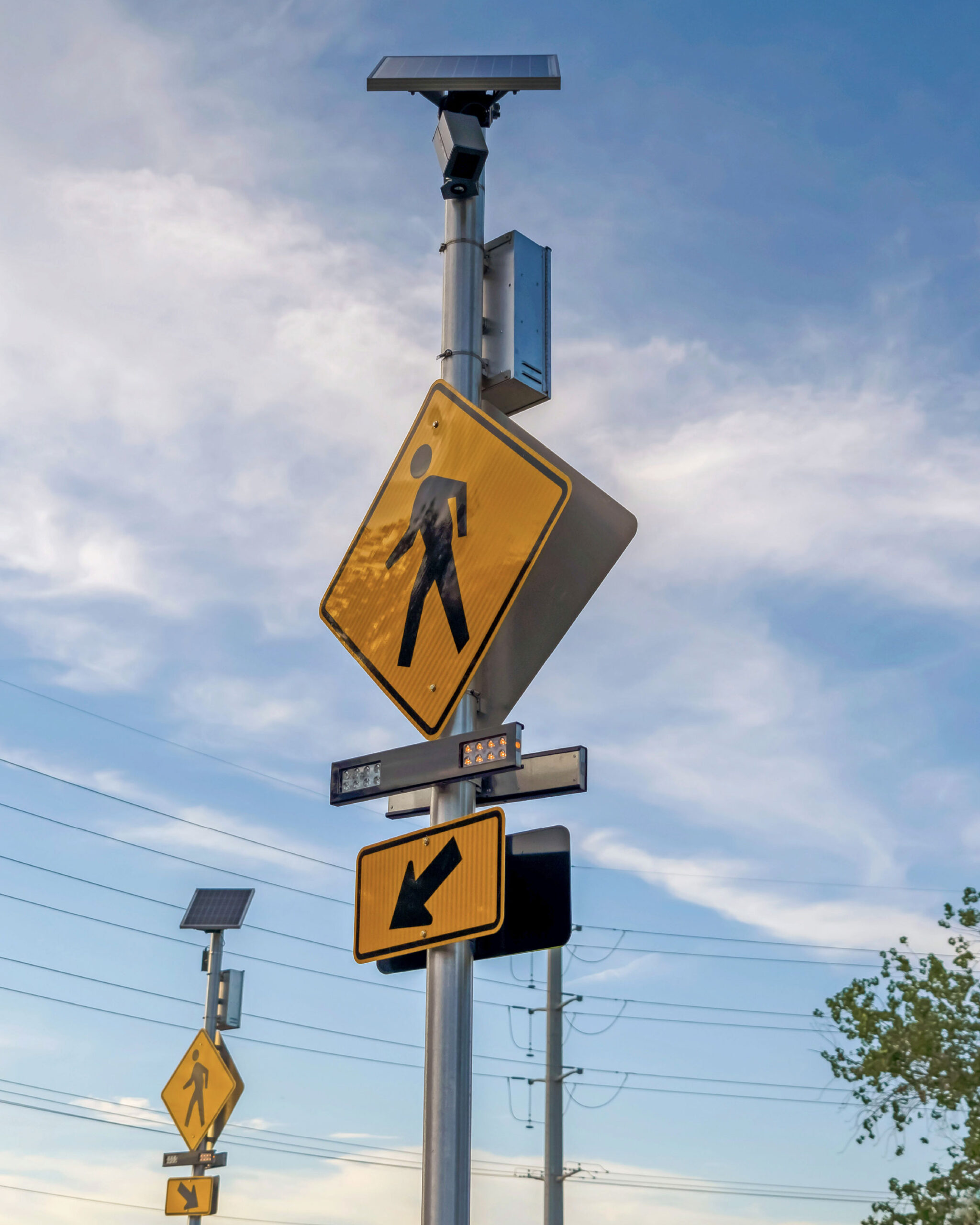
As students head back to school, it’s a good time to review updated North Carolina pedestrian safety laws. Pedestrian fatalities have risen significantly over the past decade; staying alert, slowing down, and following these laws are essential to keeping everyone safe.
The 2026 updates include the following important changes:
Drivers must now yield to pedestrians crossing within a marked crosswalk or an unmarked crosswalk at or near an intersection when traffic signals are not controlling the movement. Previously, drivers could pass through an unmarked intersection without yielding to a pedestrian.
Drivers should slow down and be prepared to stop whenever a pedestrian is crossing. They should also never pass another vehicle that has stopped at a crosswalk, as the stopped vehicle may be blocking the driver’s view of a pedestrian.
Drivers must come to a complete stop and remain stopped until a blind or visually impaired pedestrian has safely crossed the street. This applies when the pedestrian is using a white cane or is accompanied by a guide dog. Failing to follow this law could result in a Class 2 misdemeanor.
Understanding North Carolina’s pedestrian safety laws is an important part of promoting safer roads. The National Highway Safety Administration also recommends the following tips for drivers to help protect pedestrians.
- Slow down. Speeding puts everyone at risk—not just the driver, but everyone sharing the road, including pedestrians.
- Watch for pedestrians everywhere and keep blind spots to a minimum. Be especially cautious at night or in bad weather, when pedestrians may be harder to see and can appear unexpectedly.
- Yield to pedestrians in crosswalks and stop far enough back to keep them visible to approaching drivers, giving others time to stop safely as well.
- Slow down and be ready to stop whenever you’re turning or approaching a crosswalk.
- Never pass a vehicle stopped at a crosswalk. A pedestrian may be crossing where you can’t see them.
- Follow the posted speed limit, especially in school zones, neighborhoods, and areas where pedestrians and children are present.
- Use extra caution when backing up and always check for pedestrians before moving.
If you receive a failure-to-yield ticket or find yourself facing traffic court, Craft Law Offices can help you navigate the process and determine whether your charge, fine, or ticket may be reduced or modified. For more information, call Leslie Craft at 252-752-0297.